

I was looking for something else and stumbled on a German folktale fragment recorded by Adalbert Kuhn and F. L. W. Schwartz in 1848 that basically puts disenchantment in folkloric form.
It is very short. Loosely/hastily translated from the German it reads:
“Now there is no more magic (Zauberei) or witchcraft (Hexerei). This is because the Sixth and Seventh Books of Moses cannot be used any longer. It was these books that meticulously inscribed and recorded all witchcraft, magic, and incantations (Besprechung). These two books are sealed in Wittenberg and they are exhibited as curiosities, but cannot be borrowed.”
I’m posting it here as a small research note. One of my arguments in The Myth of Disenchantment is that the story of magic’s departure has a long history in folktales themselves. For example, as I discuss, Chaucer, The Tale of the Wyf of Bathe (ca. 1380–1400) already says that the land was once full of fairy enchantment, but by the fourteenth century, nobody could see the elves anymore.
(Continue reading for a little more on the subject of fairytales of disenchantment)
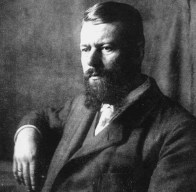 Having recently taught Max Weber’s “Science as a Vocation” (Wissenschaft als Beruf), I noticed that in their response essays many of my students were unsure about when he gave this famous lecture. Some of the students dated the lecture to 1918 and others to 1917. They aren’t alone in this perplexity as one sees both 1917 and 1918 in the English scholarship (especially among non-specialists). Plus on Facebook I’ve now seen two different discussions among colleagues as to the authoritative date. So I’d like to weigh in.
 Absolute Disruption: Theory after Postmodernism