Last week, while (virtually) attending The Foucault Century conference at Penn, I was watching Donovan Schaefer’s most excellent talk, which he kicked off with this super-famous passage from Michel Foucault’s L’Archéologie du savoir:
What, do you imagine that I would take so much trouble and so much pleasure in writing, do you think that I would keep so persistently to my task, if I were not preparing—with a rather shaky hand—a labyrinth into which I can venture . . . in which I can lose myself and appear at last to eyes that I will never have to meet again? I am no doubt not the only one who writes in order to have no face.
I’d recently been reading Jorge Luis Borges for the millionth time (he’s one of my favorite authors) and the passage reminded me of the epilogue to his El hacedor published in English as The Maker. Borges writes (Hurley’s translation in Borges’s collected fictions)
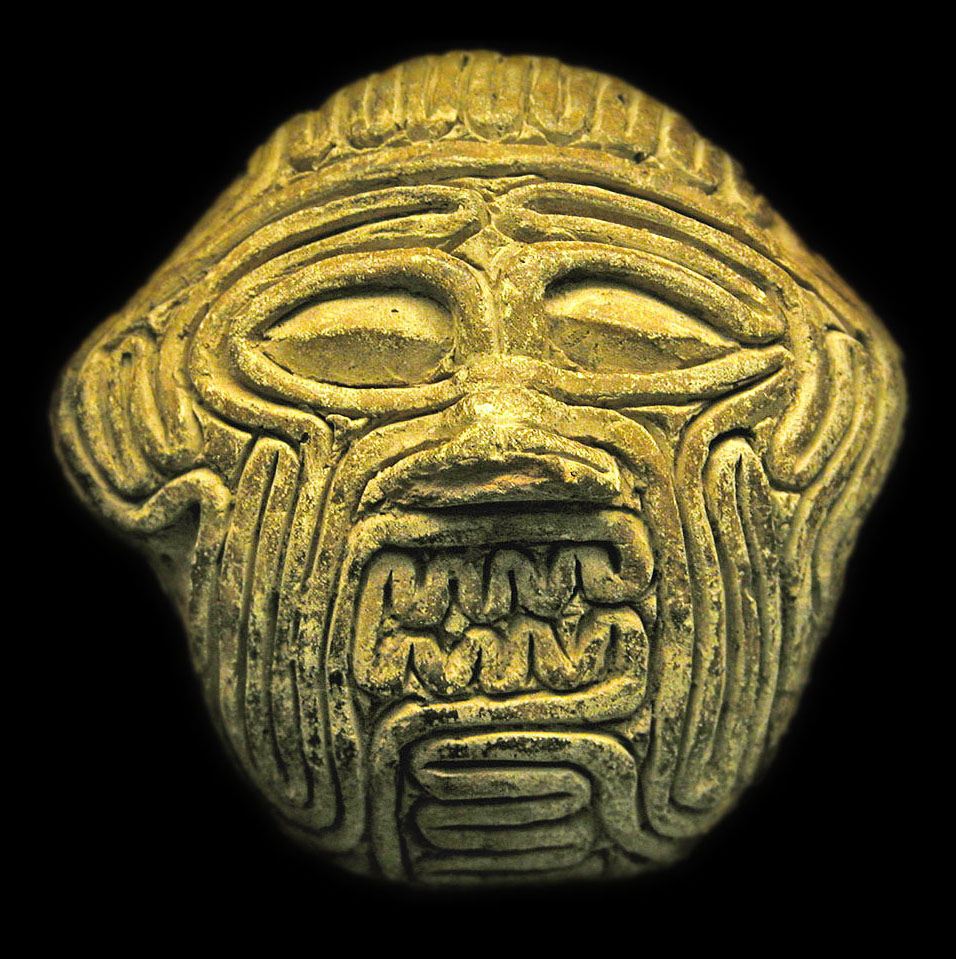
A man sets himself the task of portraying the world. Through the years he peoples a space with images of provinces, kingdoms, mountains, bays, ships, islands, fishes, rooms, instruments, stars, horses, and people. Shortly before his death, he discovers that that patient labyrinth of lines traces the image of his face
There are definitely striking echoes between the two passages. A quick search suggests a possible chain of influence. Roger Caillois’s French translation L’Auteur et autres textes, came out from Gallimard in 1965. In 1966, Foucault famously began Les Mots et les choses by referencing Borges. So we know not only that Foucault knew Borges’s work, but that he was reading Borges precisely in the years between the French publication of El hacedor and L’Archéologie du savoir which appeared in 1969.
The structural resonances between the two passages are intense. Borges gives us a “patient labyrinth of lines” (ese paciente laberinto de líneas) that “traces the image of his face” (traza la imagen de su cara). Caillois translates this as a “patient labyrinth of forms” (ce patient labyrinthe de formes) that “is nothing other than his portrait” (n’est rien d’autre que son portrait). Foucault, in turn, imagines writing as the construction of “the labyrinth in which to venture” (le labyrinthe où m’aventurer), a place in which he can “lose myself” (où me perdre), before concluding that he and others write “in order to have no face” (écrivent pour n’avoir plus de visage)..
This might have been a deliberate allusion on Foucault’s part, but that isn’t what I’m most interested in. What interests me more is how precisely Foucault seems to reverse Borges.
For Borges, one writes the world. The writing produces a maze and at the other side of that maze one discovers oneself, one’s own face. Writing as self-discovery. For Foucault, writing again produces a labyrinth, but the labyrinth is a mask or at least something one disappears into. One loses one’s face. So writing as concealment.
Anyway, just a small observation. Not something important enough for an article, but I thought it was fn putting down as a very short research note. So here it is.

